

_500x500.jpg)
『Hydrotechnik Flow Meter: Manual Guide to High Precision Pressure Sensor Interfacing for Machine Testing』Related information(flow rotameter|digital flow meter|balo meter|hydraulic flow meter|volumetric meter|positive displacement meter|pitot tube flow meter|displacement meter|cfm meter|variable area flow meter|inline flow meter|differential pressure flow meter|calibrated flow meter|velocity meter|paddle wheel flow meter|oval gear flow meter|anemometer hvac|multiphase flow meter|doppler flow meter|thorpe tube flowmeter|heat flow meter)
Hydrotechnik Flow Meter: Manual Guide to High Precision Pressure Sensor Interfacing for Machine Testing
Quick Answer: For machine testing with a Hydrotechnik flow meter, use a two-wire 4-20 mA HART pressure transmitter with 0.1 percent full scale accuracy. Match the pressure range to the test bench. A 0 to 400 bar transmitter works for most hydraulic motor and pump tests. Wire the shield at the PLC end only to keep the pressure signal stable.
1. Scope of This Guide
This guide covers the practical connection between a Hydrotechnik flow meter and a high precision pressure sensor on a hydraulic test bench. The steps apply to motor test rigs, pump test stands, valve leakage benches, and marine steering gear test systems. We do not cover basic hydraulic design. Most engineers skip the theory and go straight to the wiring.
In practice, the interface rules are simple. Use the correct analog input type. Match the pressure range. Filter the signal. Calibrate once per year.
2. Hydrotechnik Flow Meter Signal Types
Hydrotechnik flow meters often output a frequency signal. Some models provide a 4-20 mA output instead. The frequency output works with high-speed counter modules. The 4-20 mA output works with standard analog inputs. Do not connect a frequency signal to a normal analog input channel. You will see random values or zero.
Here is the thing. A high precision pressure sensor almost always outputs 4-20 mA HART or 0 to 10 V. The 4-20 mA HART version survives longer cable runs and noisy pump rooms. Use a two-wire connection. Two-wire connection reduces wiring errors on a crowded test bench.
3. Pressure Range Selection
Do not guess the pressure range. A wrong range causes poor resolution or sensor damage. For a hydraulic motor test bench that runs at 180 bar, choose a 0 to 400 bar transmitter. The 4 mA point is 0 bar. The 20 mA point is 400 bar. At 180 bar the output is 11.2 mA. The PLC sees a clean mid-scale signal. If you choose a 0 to 600 bar sensor, the same 180 bar gives 8.8 mA. The resolution is 30 percent worse.
For return lines and leakage tests, use a 0 to 10 bar or -1 to 9 bar range. These low ranges need a ceramic or thin-film strain gauge sensor. A standard 0 to 400 bar sensor will not resolve small leakage rates well.
4. Wiring the Pressure Sensor to a PLC or Data Logger
Use this connection. Pin 1 of the pressure transmitter goes to 24 V DC positive. Pin 2 goes to the PLC analog input positive. The analog input negative goes to 24 V DC negative. Set the PLC channel type to 4-20 mA. Set the scaling to 4 mA equals 0 bar and 20 mA equals 400 bar. Add a filter time constant between 50 ms and 200 ms. This removes pump ripple noise without hiding pressure peaks during a fast cycle.
For the Hydrotechnik flow meter, use a separate input channel. If the flow meter has a frequency output, set the counter module for the correct pulse factor. The pulse factor is often shown on the sensor label in pulses per litre. A DN15 turbine meter may output 1000 pulses per litre. A gear meter may output a different value. Enter this value into the PLC or the Hydrotechnik display unit.
If the test bench sits in an ATEX Zone 1 area, use an intrinsically safe 4-20 mA HART pressure transmitter and suitable barriers. Keep the safety barriers inside the safe area cabinet.
5. Grounding and Noise Control
Hydraulic test benches have motors, solenoid valves, and variable frequency drives. These devices create electrical noise. Use shielded twisted pair cable for the pressure sensor. Connect the shield at the PLC cabinet side only. Leave the floating end at the sensor disconnected. A shield grounded at both ends can create a ground loop. Then the pressure reading becomes unstable.
We have seen this on customer sites many times. Last year a customer in Vietnam ran a pump test bench with a 0 to 400 bar pressure sensor. A 0.2 bar sine wave appeared on the signal whenever the variable frequency drive started. The pressure sensor was stable on a bench test. The problem was grounding, not the sensor. After single-ended shield grounding, the signal settled within 100 ms.
6. Temperature Compensation and Flui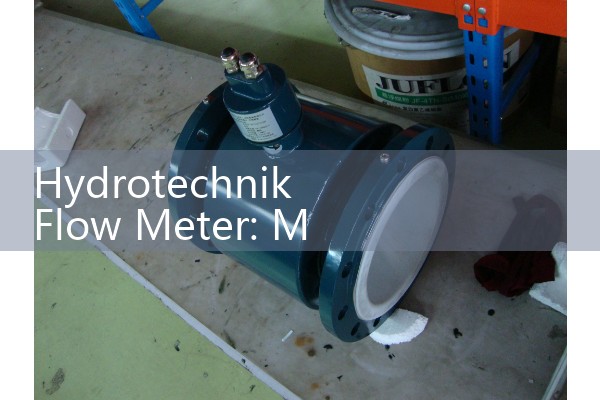
Hydraulic oil in a test bench often runs from 40 °C to 80 °C. Use a pressure sensor with a 316L stainless steel diaphragm and temperature compensation from -20 °C to 85 °C. This keeps the zero point stable. For water glycol or phosphate ester fluids, check the seal material. FKM works for many mineral oils. EPDM works for water based fluids. Do not mix the two materials.
Water based fluids can have conductivity from 500 µS/cm to 5000 µS/cm. This matters if you use an electromagnetic flow meter in the same loop. For a water glycol mixture with viscosity 25 cP, specify an EPDM seal and a pressure range of 0 to 25 bar. For a food oil test bench where flow is measured in kg/h, combine a Coriolis mass flow meter with a 0 to 10 bar pressure sensor.
If the test fluid temperature exceeds 120 °C, add a cooling fin or use a remote diaphragm seal. Direct mounted sensors can drift when the amplifier gets too hot. Add a PT100 temperature sensor near the pressure transmitter. Use the temperature value to correct fluid density and viscosity in the flow meter calculation.
7. Calibration Work on the Bench
Calibrate a high precision pressure sensor with a deadweight tester or a calibrated digital gauge. A two point check at 0 bar and full scale is the minimum. For machine testing, use a five point check at 0, 25, 50, 75, and 100 percent of full scale. Record the results. A 0.1 percent full scale sensor may show 0.05 percent hysteresis. That is normal.
The Hydrotechnik flow meter also needs calibration. Gear type meters drift as clearances wear. Turbine meters shift with viscosity changes. If the test fluid changes from ISO VG 32 to VG 46 or VG 68, the flow meter K-factor may shift by a few percent. Use the pressure sensor and PT100 data to correct or verify the flow reading when the fluid changes.
8. Recommended Pairings for Common Tests
The pairings below are starting points. Your exact pressure range and flow range may differ.
- Hydraulic motor test bench: Hydrotechnik flow meter DN15, 1 to 40 L/min, with a 0 to 400 bar pressure transmitter, 4-20 mA HART output.
- Pump test stand return line: DN25 flow meter, 10 to 200 L/min, with a 0 to 25 bar pressure sensor, FKM seal.
- Marine steering gear test: DN10 flow meter, 0.5 to 20 L/min, with a 0 to 315 bar pressure transmitter, 316L diaphragm.
Silver Automation Instruments can supply the pressure transmitter and the Hydrotechnik flow meter as a matched set. Tell us your test pressure in bar, temperature in °C, pipe size in DN, and flow range in L/min.
FAQ: Hydrotechnik Flow Meter and Pressure Sensor Interfacing
Q: Can I connect a Hydrotechnik flow meter directly to a 4-20 mA pressure sensor?
A: No. The flow meter has its own output. The pressure sensor has a separate loop. Both can feed the same PLC, but they need separate input channels.
Q: What pressure sensor accuracy do I need for machine testing?
A: Use 0.1 percent full scale for most tests. For low differential pressure leakage tests, use 0.05 percent full scale or a dedicated differential pressure transmitter.
Q: What cable length is safe for a 4-20 mA pressure sensor?
A: A two-wire 4-20 mA loop can run 200 m or more in a factory. Use shielded twisted pair cable. Check the total loop resistance against the 24 V DC supply.
Q: Why does my pressure reading drift when the hydraulic oil heats up?
A: The sensor zero point may not be fully temperature compensated. Or the sensor seal is not compatible with the fluid. Check the temperature compensation range and the wetted material.
Q: Does Silver Automation Instruments sell Hydrotechnik flow meters and pressure sensors together?
A: Yes. Silver Automation Instruments supplies Hydrotechnik flow meters, high precision pressure transmitters, PT100 sensors, and signal conditioners. Send your pressure in bar, temperature in °C, pipe size in DN, and flow range in L/min.
Contact Silver Automation Instruments for a quote. Tel: +86-25-68650347. WhatsApp: +86-25-52155837. WeChat: +86 15365082610. Or visit flow-meter.com.au.
 Hot Product
 Related AD