

『Hvac Duct Flow Meter: Measuring Static System Pressure Drops and Air Volumetric Velocity Changes』Related information(flow rotameter|digital flow meter|balo meter|hydraulic flow meter|volumetric meter|positive displacement meter|pitot tube flow meter|displacement meter|cfm meter|variable area flow meter|inline flow meter|differential pressure flow meter|calibrated flow meter|velocity meter|paddle wheel flow meter|oval gear flow meter|anemometer hvac|multiphase flow meter|doppler flow meter|thorpe tube flowmeter|heat flow meter)

HVAC Duct Flow Meter: Measuring Static System Pressure Drops and Air Volumetric Velocity Changes
Quick Answer: An HVAC duct flow meter measures air velocity and static pressure drop in supply and return air ducts. Insertion thermal mass flow meters suit round and rectangular ducts from DN100 to DN2000. Differential pressure transmitters with averaging probes measure static pressure drops from 0 to 2500 Pa. Send your duct size, air velocity, temperature, and signal output to get a duct flow meter quotation.
Why Duct Static Pressure Drop Changes Air Volumetric Velocity
Static pressure drop is one of the most useful readings in an HVAC duct system. A clean filter may show a pressure drop of 50 to 150 Pa. A dirty filter can reach 300 Pa or more. Duct leakage, closed dampers, and undersized ducts also increase static pressure. When static pressure rises, air volumetric velocity does not stay constant. The fan curve shifts and actual cubic meters per hour often fall. Static pressure changes affect ventilation load, coil performance, and energy use.
Most engineers skip this part and install a thermal mass flow meter that reads velocity directly. But if you need both static pressure and velocity, a differential pressure transmitter with a pitot tube or averaging probe is a practical choice. The transmitter reads total pressure and static pressure. The difference gives velocity pressure. Air velocity then follows from the velocity pressure and air density. Velocity pressure calculation is standard for HVAC commissioning and filter monitoring.
Flow Meter Types for HVAC Duct Measurement
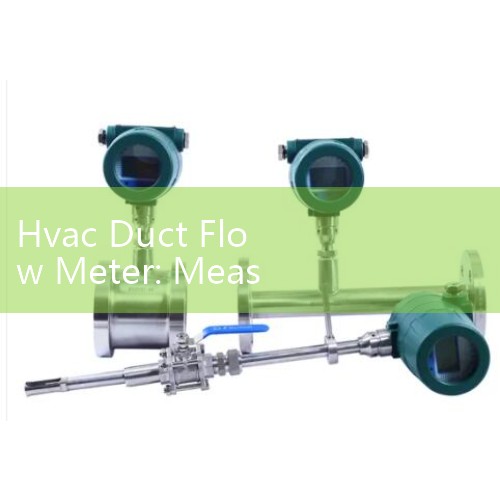
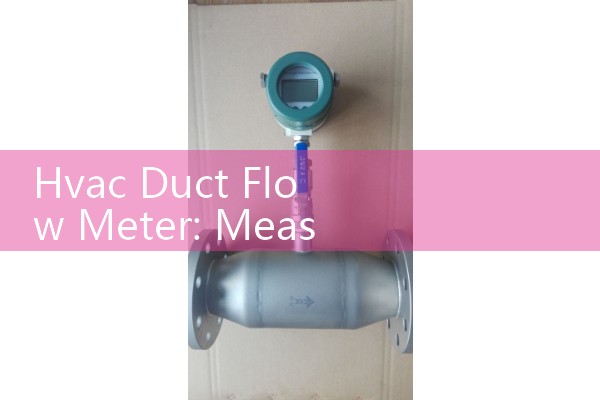
Insertion thermal mass flow meters are common for HVAC ducts. Thermal mass flow meters work at air velocities from 0.2 m/s to 60 m/s. Temperature range is -20 °C to 100 °C. Output options include 4-20 mA HART, RS485 Modbus, and pulse. A typical insertion thermal mass flow meter from Silver Automation Instruments suits duct widths from DN100 to DN2000. The meter measures mass velocity directly, so you do not need separate temperature or pressure compensation. Thermal mass flow meters are a good fit for building automation systems that need a stable 4-20 mA signal.
Differential pressure transmitters with averaging pitot tubes work better when the target is static pressure drop. A common range is 0 to 1250 Pa or 0 to 2500 Pa. Accuracy can be ±0.5% of span. The transmitter converts the pressure signal to 4-20 mA HART. You mount the probe across the duct and read average velocity pressure. In practice, DP transmitters work well for round ducts and large rectangular ducts above 300 mm.
How to Select a Duct Flow Meter Without Guesswork
Here is the thing. Many contractors in Southeast Asia and the Middle East ask for a price without duct size. Missing duct dimensions cause delay. For a quick quotation, send these values to Silver Automation Instruments:
Duct width and height or diameter. Air velocity range in m/s. Air temperature in °C. Static pressure drop in Pa. Required signal output such as 4-20 mA HART or Modbus RTU. Power supply such as 24 V DC or 220 V AC.
If duct velocity stays below 1 m/s, a thermal mass flow meter is often more stable than a differential pressure transmitter. If the main goal is filter pressure drop, select a DP transmitter with a range of 0 to 2500 Pa. For new building projects in Vietnam, T
Installation Rules That Prevent Wrong Readings
Do not install a duct flow meter just after a bend, damper, fan, or filter. Turbulence there creates unstable readings. Allow at least 5 to 10 duct diameters of straight run upstream. For a round duct, insert the probe at the center line. For a rectangular duct, use an averaging probe that spans the full duct width. If the duct has only 3 diameters of straight run, use a flow conditioner or choose a thermal mass flow meter with a longer insertion length.
We have seen this issue on customer sites many times. A common site problem is a probe installed 50 cm after a fire damper. The velocity signal jumps. The BMS records false air flow values. The fix is simple. Move the probe to a straight section or use an averaging probe with multiple sensing points. Duct access doors help for maintenance and sensor verification.
FAQ: Five Key Questions About HVAC Duct Flow Meters
Q1: Can a duct flow meter measure both static pressure drop and air volumetric velocity?
Yes. A combined system with a differential pressure transmitter and a velocity probe can measure both. A thermal mass flow meter gives air velocity and mass flow but not static pressure drop. Use both if the BMS needs filter status and air flow.
Q2: What flow meter works for rectangular HVAC ducts?
An insertion thermal mass flow meter or an averaging pitot tube with a DP transmitter. For large rectangular ducts above 600 mm width, an averaging probe is usually more cost effective.
Q3: What is a normal static pressure drop in a clean duct?
Clean air filters often show 50 to 150 Pa. Dirty filters can exceed 300 Pa. A rise above the clean value of 100 to 150 Pa is a common maintenance trigger.
Q4: Does a duct flow meter need temperature compensation?
For differential pressure calculation, yes. Air density changes with temperature. A thermal mass flow meter measures mass velocity directly and includes temperature compensation. For HVAC ducts between 10 °C and 60 °C, thermal mass flow meters give stable readings without manual compensation.
Q5: What signal output should I request for building automation?
4-20 mA HART is standard. For direct BMS integration, ask for Modbus RTU or BACnet output. Silver Automation Instruments can configure the meter for 24 V DC power and 4-20 mA HART before shipping.
Get a Duct Flow Meter Quotation from Silver Automation Instruments
Send your duct width, duct height or diameter, air velocity range, static pressure drop, temperature, and required output. You will get a technical proposal and price within 24 hours. Contact Silver Automation Instruments. Tel: +86-25-68650347. Whatsapp: +86-25-52155837. WeChat: +86 15365082610.
We supply flow meters and pressure transmitters to HVAC contractors and industrial users in Southeast Asia, Oceania, Latin America, Africa, and the Middle East. Tell us your duct size and air flow range. We will recommend either a thermal mass flow meter or a differential pressure transmitter with an averaging probe.
 Hot Product
 Related AD