

『High Pressure Magnetic Flow Meter Liners: Retaining Rigid Seals at 100+ Bar Pumping Rates』Related information(flow rotameter|digital flow meter|balo meter|hydraulic flow meter|volumetric meter|positive displacement meter|pitot tube flow meter|displacement meter|cfm meter|variable area flow meter|inline flow meter|differential pressure flow meter|calibrated flow meter|velocity meter|paddle wheel flow meter|oval gear flow meter|anemometer hvac|multiphase flow meter|doppler flow meter|thorpe tube flowmeter|heat flow meter)
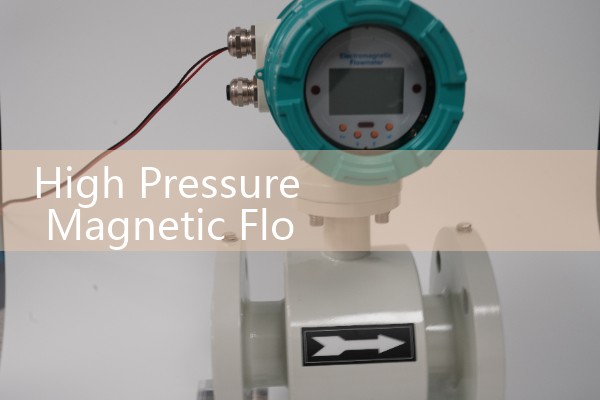
High Pressure Magnetic Flow Meter Liners: Retaining Rigid Seals at 100+ Bar Pumping Rates
Quick Answer: High pressure magnetic flow meters above 100+ bar pumping rates need liners that do not creep or deform under pump pulsation. PTFE and PFA liners with steel or Hastelloy reinforcement hold a rigid seal at these pressures. Send Silver Instruments your pipe size, pressure, temperature and flow range for a specific liner recommendation.
Why Liner Selection Changes Above 100 Bar
Most magnetic flow meters for water and wastewater run at 10 to 40 bar. A standard hard rubber or polyurethane liner works fine there. At 100 bar and higher, the liner faces two forces. The static pressure pushes the liner against the steel body. The pump pulsation adds fatigue cycles.
We have seen this on customer sites many times. A polyurethane liner that survived 60 bar for years starts to extrude at 120 bar. The edge near the flange cold flows. That creates a leak path between the liner and the electrode. Once the seal breaks, the meter reads unstable values.
High pressure magnetic flow meters need a liner that resists extrusion. The liner must have high compressive strength. It also needs a tight bond to the meter body. Most failures at 100 bar come from liner creep, not from the coil or electrodes.
Common Liner Materials and Their Pressure Limits
PTFE is the most common choice for high pressure magnetic flow meters in chemical plants. It handles strong acids and bases. It handles temperatures up to 180 °C. The weakness is cold flow under high compressive load. So we use PTFE with a metal reinforcement plate or a PFA liner when the pressure exceeds 100 bar.
PFA is similar to PTFE but has better flexural strength. It can hold a rigid seal at 150 bar in many DN15 to DN80 sizes. We recommend PFA for high purity chemicals, strong oxidizers, and hot demineralized water. One customer in Singapore runs 120 bar sodium hydroxide through a DN50 PFA lined mag meter. The meter has held zero drift below 0.5 percent for 18 months.
Hard rubber liners are rated to 100 bar in some designs but they have limits. They work in seawater and cold water injection at 90 bar. Above 110 bar, hard rubber starts to tear at the flanges. We do not recommend hard rubber for 100+ bar pumping unless the temperature stays below 40 °C and the flow is steady.
Polyurethane liners are tough but not for extreme pressure. They suit abrasive slurries and mining tailings at 40 to 80 bar. Above 100 bar, the liner edge extrudes. We saw this on a copper slurry line in Chile. The customer replaced a polyurethane liner after four months. A reinforced PFA liner solved the problem.
How We Test Liners for High Pressure Pumping
Silver Instruments tests each high pressure liner with a hydrostatic test at 1.5 times the rated pressure. A DN40 PFA meter rated for 160 bar gets tested at 240 bar for 60 minutes. The liner must not move more than 0.2 mm at the flange face. We then run a 24 hour fatigue test with a piston pump to simulate pulsation.
We also check the electrode seal. At high pressure, the electrode gasket can become the weak point. We use PTFE or ceramic electrode holders and torque them to the same spec as the liner bolts. Many plants forget this. The liner can be perfect but the electrode leaks.
Installation Notes for 100+ Bar Mag Meters
Here is the thing. The liner selection is only half the job. The mating flanges must be flat within 0.5 mm. The bolts must be torqued in a star pattern. Do not use
Another point many engineers skip. At 100 bar, the meter body has small elastic expansion. The liner must be thick enough to absorb that movement. We add 20 percent extra liner thickness above 100 bar. This keeps the seal rigid without over compressing the liner.
Quick Reference: Liner vs Pressure vs Fluid
For 100 to 160 bar with clean chemicals, use reinforced PTFE or PFA. For 100 to 120 bar with seawater or produced water, use hard rubber only if temperature stays below 40 °C. For abrasive slurries at 80 to 120 bar, use a reinforced polyurethane liner with tungsten carbide electrodes. For high purity water at 150 bar and 90 °C, use PFA with platinum electrodes.
Do not guess the liner material from pressure alone. Fluid conductivity above 5 µS/cm, temperature and abrasion all affect the seal. A paint manufacturer in Vietnam asked us for a 100 bar mag meter for titanium dioxide slurry. We specified a reinforced polyurethane liner with a DN25 meter. The first trial lasted 12 months without liner movement.
FAQ: High Pressure Magnetic Flow Meter Liners
Question: What is the maximum pressure for a standard PTFE magnetic flow meter liner?
Answer: Standard PTFE liners without reinforcement hold up to 100 bar in small sizes like DN15 to DN50. For pressures above 100 bar, use a metal reinforced PTFE or PFA liner. Silver Instruments rates some reinforced PFA liners to 160 bar in DN25.
Question: Can a magnetic flow meter handle 100 bar water injection?
Answer: Yes. Use a hard rubber or reinforced PFA liner depending on temperature. For cold seawater injection at 100 bar, hard rubber works. For hot water above 80 °C at 100 bar, use PFA. Send us the water analysis and temperature.
Question: Why do magnetic flow meter liners creep at high pressure?
Answer: PTFE and polyurethane are viscoelastic. Under constant high pressure, they slowly deform. This deformation is called cold flow. It creates a gap at the flange face and the meter leaks. Reinforcement plates stop this movement.
Question: What is the best liner for 120 bar sodium hydroxide?
Answer: PFA is the best choice. PFA holds a rigid seal at 120 bar and handles sodium hydroxide at temperatures up to 100 °C. We have supplied DN50 PFA meters for this exact service in Southeast Asia.
Question: Does high pressure affect meter accuracy?
Answer: Not directly. The magnetic flow principle does not depend on pressure. But liner movement changes the flow profile and electrode position. That causes zero shift and span error. A rigid seal keeps the meter within 0.5 percent accuracy.
Get a Liner Recommendation from Silver Instruments
We are Silver Automation Instruments, a flow meter manufacturer and supplier for oil and gas, water and wastewater, chemical and food plants. We stock high pressure magnetic flow meters from DN15 to DN300 with PTFE, PFA, rubber and polyurethane liners. Each meter gets a hydrostatic test report before shipment. We can configure 4-20 mA HART output for remote monitoring. ATEX Zone 1 certified designs are available for oil and gas service.
Send us your pressure in bar, temperature in °C, pipe size in DN, flow range in m³/h and fluid type. We will reply with a liner recommendation and price within 24 hours. You can reach us at Tel: +86-25-68650347, WhatsApp: +86-25-52155837, WeChat: +86 15365082610.
 Hot Blog
 Related AD