

『Flow Meter on Oxygen Tank: Understanding Medical Gas Flow Regulation and Delivery Standards』Related information(flow rotameter|digital flow meter|balo meter|hydraulic flow meter|volumetric meter|positive displacement meter|pitot tube flow meter|displacement meter|cfm meter|variable area flow meter|inline flow meter|differential pressure flow meter|calibrated flow meter|velocity meter|paddle wheel flow meter|oval gear flow meter|anemometer hvac|multiphase flow meter|doppler flow meter|thorpe tube flowmeter|heat flow meter)
Flow Meter on Oxygen Tank: Understanding Medical Gas Flow Regulation and Delivery Standards
Quick Answer: A flow meter on an oxygen tank measures the actual gas flow rate in liters per minute or cubic meters per hour. The correct device depends on line pressure, required flow range, connection size, and whether the system falls under medical gas delivery standards. For most oxygen cylinder and manifold applications, a variable area flow meter or thermal mass flow meter with 4-20 mA output is the practical starting point.
Why Oxygen Tank Flow Measurement Is Different
Oxygen service is not the same as compressed air service. Oxygen supports combustion. Small particles, oil residue, or the wrong elastomer can create a serious safety risk. We have seen this on customer sites many times. An oxygen line in a cylinder filling station failed after a standard rubber seal was used by mistake. The seal degraded and blocked the flow path. So material compatibility is the first thing you check.
Pressure changes also affect volumetric flow readings. A rotameter calibrated at 4 bar will not read the same value at 2 bar. This confuses many first time buyers. Always confirm the operating pressure before you select a flow meter for an oxygen tank. If the tank pressure drops during use, a compensated flow meter or a pressure regulator upstream helps keep readings stable.
Common Flow Meter Types for Oxygen Service
Variable area flow meters, often called rotameters, are the most common choice. They give a direct visual reading with no power supply. Many oxygen tank regulators already include a small plastic or glass tube flow meter with a 0 to 15 liters per minute scale. These are cheap and easy to replace. But they do not provide an output signal for data logging or remote monitoring.
Thermal mass flow meters are another option. They measure mass flow directly, so changes in line pressure and temperature have less effect on the reading. A thermal mass flow meter for oxygen might cover 0 to 50 liters per minute with accuracy of plus or minus 1.5 percent of full scale. This type works well for manifold monitoring, leak testing, and process oxygen blending. Silver Instruments supplies thermal mass flow meters with 4-20 mA HART output for industrial gas lines.
Metal tube rotameters fit higher pressure oxygen circuits. They can handle pressures to 40 bar and come with 316L stainless steel or PTFE wetted parts. For cylinder filling and gas distribution skids, this type gives a local indication plus optional alarm switches. Differential pressure flow meters are less common for small oxygen tanks. They usually suit larger pipe sizes from DN25 and above.
Medical Gas Flow Regulation and Delivery Standards
Do not assume a flow meter on an oxygen tank is automatically a medical device. In hospital patient zones, oxygen delivery equipment usually falls under ISO 7396-1 and national codes like NFPA 99 in the United States or HTM 02-01 in the United Kingdom. These standards cover pipeline design, terminal units, alarm systems, and permitted flow ranges.
For industrial oxygen used in cylinder filling, food packaging, or water treatment, the rules are different. Oxygen cleaning standards such as CGA G-4.1 and ASTM G93 define how components must be cleaned and packaged. A flow meter that meets these standards may still not be cleared for direct patient breathing circuits. If your application is patient care, confirm local medical device registration with a medical gas specialist. Silver Instruments focuses on industrial oxygen measurement. Our products suit bulk supply lines, manifold rooms, test benches, and filling stations.
Key Selection Parameters for an Oxygen Flow Meter
Start with flow range. If you monitor a single cylinder, 0 to 15 liters per minute covers most therapy and small process uses. If you monitor a manifold feeding multiple lines, flow can reach 100 to 500 liters per minute. Write down the minimum and maximum expected flow. Many customers skip this step and end up operating in the bottom 10 percent of the meter range where accuracy is poor.
Next, confirm pressure and temperature. Typical oxygen tank delivery pressure is 4 bar after the regulator. Cylinder filling lines may see 150 bar upstream and 10 to 40 bar downstream. Temperature range is usually narrow, between 0 and 50 degrees Celsius, because the flow meter sits after the regulator. For outdoor installations, check whether the meter housing can handle direct sun.
Connection size is also important. Small oxygen flow meters use 1/4 inch NPT or G1/4 threads. Manifold lines often use DN15 or DN20 flanges or compression fittings. Silver Instruments can match common process connections from DN6 to DN25 for gas flow. If your pipe size is larger, send us the actual outer diameter and wall thickness.
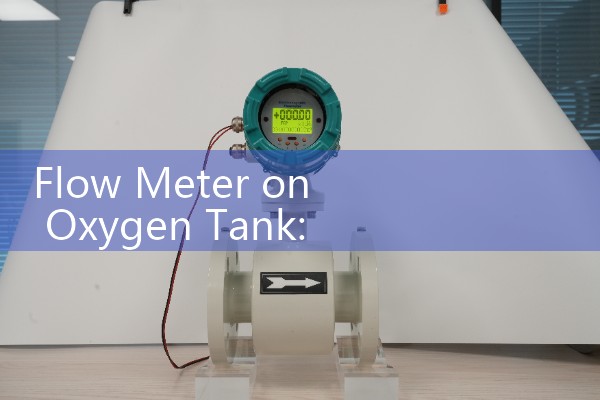
Output signal matters when you need remote display or data recording. A local rotameter has no output. A thermal mass flow meter gives 4-20 mA, pulse, or RS485
Installation and Calibration Details
Install the flow meter downstream of the pressure regulator. This keeps the pressure stable and protects the meter from cylinder surge. Use a filter upstream if the oxygen line may contain particles. Oxygen clean the pipe before installation. Purge with dry nitrogen first if possible. Do not use thread tape on oxygen fittings unless it is labeled oxygen safe. Oil and grease are not allowed on any wetted surface.
Calibration should be done with the actual gas or a traceable gas mixture. Many flow meters are calibrated with air and then corrected for oxygen. The correction factor is normally close to 1.0 for thermal mass flow meters and variable area devices, but you still need to verify it. For critical medical gas checks, a reference flow meter with a current calibration certificate helps. Most engineers skip this part on site because of time. That creates more problems later during audits.
Mount the meter vertically for rotameters. A tilted rotameter changes the float position and the reading error can be over 10 percent. Thermal mass flow meters usually do not care about orientation, but they need a straight run of 5 to 10 pipe diameters upstream and downstream if installed in a pipe line.
What Can Go Wrong on a Real Oxygen Tank Installation
A paint manufacturer in Southeast Asia installed a small plastic tube flow meter on an oxygen feed line without checking the material certification. The flow tube cracked after two months because the plastic was not rated for pure oxygen. The replacement cost was small, but the production downtime was not. So material choice matters more than price.
A hospital gas line contractor in the Philippines needed 20 flow meters for oxygen manifold monitoring. They requested 0 to 30 liters per minute, 4-20 mA output, and 316L wetted parts. Silver Instruments supplied thermal mass flow meters with a 6 mm compression fitting. The contractor completed the project within schedule. The key was that they sent pipe size, pressure, and flow range in the first inquiry. That reduced back and forth time.
Recommended Silver Instruments Products
For oxygen tank and manifold applications, Silver Instruments offers two practical options. The first is a thermal mass flow meter for gas. It covers 0 to 100 liters per minute, works at pressures up to 16 bar, and provides 4-20 mA HART output. Wetted parts are 316L stainless steel and PTFE. The second is a metal tube rotameter. It covers 0.5 to 200 liters per minute, handles up to 40 bar, and offers optional alarm switches. Both are suitable for oxygen cleaning on request.
We do not claim medical device certification for direct patient breathing circuits. Our products fit industrial oxygen distribution, cylinder filling, oxygen blending, and test bench applications. If you need a medical certified flow meter, be clear about that requirement. We can recommend a suitable partner in your region.
FAQ on Oxygen Tank Flow Meters
What flow range do I need for an oxygen tank?
Most single cylinder uses work with 0 to 15 liters per minute. Manifold and small distribution lines often need 0 to 50 or 0 to 100 liters per minute. Cylinder filling stations may need 100 to 500 liters per minute.
Can I use a compressed air flow meter for oxygen?
Sometimes yes, but only after oxygen cleaning and material verification. The seals, lubricants, and housing must be compatible with pure oxygen. Never reuse a flow meter from air service without cleaning.
Does pressure affect the flow reading on an oxygen tank flow meter?
Yes. Volumetric flow meters like rotameters are pressure dependent. Install a pressure regulator upstream or select a mass flow meter to reduce this error.
Do I need a medical certified flow meter for a hospital oxygen line?
If the flow meter is in a patient breathing circuit or patient zone, you likely need certification under local medical gas regulations. For manifold rooms and bulk supply lines, industrial flow meters are often accepted, but check with the hospital engineer first.
What information should I send to get a quote?
Send your gas type, operating pressure in bar, temperature in degrees Celsius, pipe size in DN, flow range in liters per minute, and output signal. Also mention if the unit needs oxygen cleaning.
Contact Silver Automation Instruments
Send us your pressure in bar, temperature in degrees Celsius, pipe size in DN, and required flow range. That is the fastest way to get a specific quote. Contact Silver Automation Instruments at Tel +86-25-68650347, WhatsApp +86-25-52155837, or WeChat +86 15365082610. We have supplied industrial flow meters to customers in Southeast Asia, the Middle East, Latin America, Africa, and Oceania.
 Hot Blog
 Related AD