

 Current position > News detail
『Digital Water Flow Meter with Output: Connecting Utility Submeters to PLCs』Related information(flow rotameter|digital flow meter|balo meter|hydraulic flow meter|volumetric meter|positive displacement meter|pitot tube flow meter|displacement meter|cfm meter|variable area flow meter|inline flow meter|differential pressure flow meter|calibrated flow meter|velocity meter|paddle wheel flow meter|oval gear flow meter|anemometer hvac|multiphase flow meter|doppler flow meter|thorpe tube flowmeter|heat flow meter)
Digital Water Flow Meter with Output: Connecting Utility Submeters to PLCs
Quick Answer: A digital water flow meter with pulse output and 4-20 mA output connects directly to a PLC counter or analog input. For utility submeters, select a meter that gives both pulse and current signals. Silver Automation Instruments supplies digital water flow meters in DN15 to DN150 sizes for utility water and wastewater lines. Send us your pressure in bar, temperature in °C, pipe size in DN, and flow range for a quote.
Why Utility Submeters Need Digital Output
Utility submeters track water use by zone, floor, or process unit. A digital flow meter sends a signal to a PLC instead of only showing a local total. The PLC can then record flow rate and total from the control room. Many sites in Vietnam, Indonesia, and Nigeria use this setup for cost allocation and leak detection.
We have seen this on customer sites many times. A plant buys one main meter and then adds small submeters on branch lines. The submeters are often DN15 to DN50. The PLC reads each meter and logs the data. That data goes to an energy management system or a water balance report.
Common Output Options for PLC Integration
Three signals are common for water submeter to PLC wiring. The first is pulse output. The meter sends one pulse for every 1 liter or 1 cubic meter. The PLC high speed counter counts pulses. The second is 4-20 mA analog output. The PLC analog input card reads 4 mA as zero flow and 20 mA as maximum flow. The third is RS485 Modbus RTU. The PLC reads flow rate, total, and diagnostics over one twisted pair.
For most utility water lines, pulse plus 4-20 mA is enough. Add Modbus when the PLC is far from the meter or when multiple parameters are needed. Some plants use HART because the host system already has HART input cards. In practice, HART is less common for simple water submeters.
Which Flow Meter Works for Utility Water Lines
We recommend an electromagnetic flow meter for clean or dirty water that has conductivity above 5 µS/cm. It has no moving parts. It does not create pressure loss. A magnetic flow meter with a DN15 to DN50 sensor fits most submeter lines. Specify an integral display or remote display depending on space. For utility water, use rubber or PTFE liner and 316L electrodes. The accuracy is normally ±0.5% of rate or better.
If the water is demineralized or reverse osmosis water with very low conductivity, use an ultrasonic clamp-on or insertion flow meter. For hot water above 120 °C, check the liner and electrode rating. For cooling water at 25 °C and 3 bar, a compact electromagnetic meter works well.
Last year a customer in Vietnam asked us to connect three water submeters to a Siemens S7-1200 PLC. The meters used 4-20 mA outputs and pulse outputs. The PLC totalized flow from the pulse signal. The analog signal gave a real time trend on a HMI. The total cable run was less than 100 meters, so no Modbus was needed.
Wiring and Signal Notes from Field Sites
Most engineers skip this part and then chase noise. Use shielded twisted pair cable for pulse and 4-20 mA signals. Separate signal cable from motor cables. Ground the shield at one end only. If you use Modbus RS485, use a termination resistor at both ends of the bus. These are simple rules, but they fix most field problems.
Set the pulse width long enough for the PLC input card. A common mistake is a pulse width of 5 ms on a relay output. Many PLC input cards miss that. We normally set the pulse width to 20 ms or more. For high speed counters, read the meter manual and set the K factor correctly. The K factor tells the PLC how many pulses equal one liter or one cubic meter.
The ana
Model Selection Based on Pipe Size and Flow Range
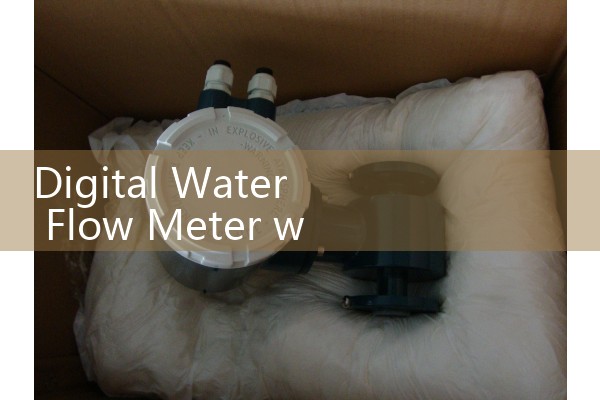
We ask customers to give us pipe size in DN, pressure in bar, temperature in °C, and normal flow range in m³/h or liters per minute. That is enough to select the right sensor. For a DN25 utility water line with 0.5 to 5 m³/h flow, a compact electromagnetic flow meter with pulse and 4-20 mA output is a solid fit. For a DN50 line with 3 to 30 m³/h, specify the next size up and the same output package.
A paint manufacturer in Southeast Asia requested a DN40 submeter for a chilled water line at 20 °C and 4 bar. The flow range was 1 to 8 m³/h. We supplied a Silver Automation Instruments electromagnetic flow meter with 4-20 mA output, pulse output, and a local digital display. The customer wired the 4-20 mA to a PLC analog input and the pulse to a counter module. That gave them both rate and total.
For larger utility headers, DN80 to DN150, a flanged electromagnetic flow meter or an insertion ultrasonic meter can be used. For billing grade measurement, check if you need revenue grade approvals. Utility submetering for internal cost allocation normally does not require custody transfer approval.
Why Silver Automation Instruments for Utility Submetering
Silver Automation Instruments supplies digital water flow meters for utility, water treatment, and industrial plants. We stock or fast build electromagnetic flow meters from DN15 to DN150. Standard output options are pulse, 4-20 mA, and RS485 Modbus. We also supply pressure transmitters and paperless recorders if your PLC project needs a full measurement loop.
We ship to Southeast Asia, Oceania, Latin America, Africa, and the Middle East. We understand that many sites are in Vietnam, Indonesia, Australia, Nigeria, Chile, Saudi Arabia, and the UAE. Our engineers can provide a wiring diagram with the signal terminal labels before you buy. That helps the PLC programmer plan the input cards.
Send us your pressure in bar, temperature in °C, pipe size in DN, and flow range. Use WhatsApp +86-25-52155837 or WeChat +86 15365082610. You can also call Tel +86-25-68650347. Tell us the PLC brand and the input card type if you have it.
FAQ
What output should I choose for a water submeter to a PLC? Choose pulse plus 4-20 mA for most utility water lines. Add RS485 Modbus if the PLC is far away or you need total, rate, and alarm status in one cable.
Can a digital water flow meter with 4-20 mA output send total flow? The 4-20 mA signal gives flow rate only. Total flow is normally sent by pulse output or Modbus registers. The PLC can integrate the analog signal, but pulse is more reliable for total.
What pipe sizes can Silver Automation Instruments supply for utility water submeters? We supply DN15 to DN150 as standard inventory for many models. Larger sizes up to DN300 or DN600 are available for main headers.
Do I need a magnetic flow meter or an ultrasonic flow meter for utility water? Use a magnetic flow meter when the water conductivity is above 5 µS/cm and the pipe is full. Use an ultrasonic clamp-on or insertion meter for low conductivity water or when you cannot stop the process.
What information do you need for a quote? Send us your pressure in bar, temperature in °C, pipe size in DN, flow range, and PLC input type. That is enough for a first recommendation.